A colossal craft buried near Seoul? The viral claim, the Anyang beacon and the real 1976 case
In early 2026 a huge story began to circulate: South Korea had allegedly downed an extraterrestrial craft with electronic warfare — one so enormous it was impossible to move — and to hide it had carved out a mountain south of Seoul and built a structure over it. The source is Steven Greer, physician and 'disclosure' activist, who says he relies on an insider with access to Pentagon black programs. According to his account, a second craft would sit under Fort Sill (Oklahoma).
The noise grew when U.S. Congressman Eric Burlison said in interviews he had heard of an object outside the U.S. 'so large it cannot be moved', with a structure built around it. A nuance most headlines skip: Burlison never named Korea — the link to Seoul was made by others. Journalist Ross Coulthart has spoken since 2023 of a 'massive object' hidden that way, also without naming a country.
Internet sleuths believed they had found the site: a circular structure roughly 82 meters wide atop a mountain in Anyang, south of Seoul, with restricted access and fencing. The coordinates spread across social media as 'the proof' of the cover-up.
This is where verification deflates the story: that structure is the Anyang VORTAC, a standard aviation navigation beacon operating since at least 1973 and visible in 1978 satellite imagery. Korean researchers replied that the facility has been there since the seventies and has no UFO connection whatsoever. There are no photos, no documents, no named witnesses; and Greer carries decades of 'imminent disclosure' announcements that never materialize.
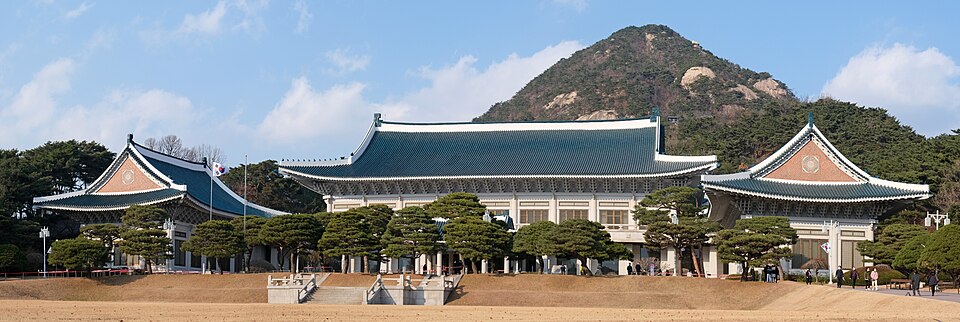
The most interesting part is what the noise uncovered: a real case, little known outside Korea. On the evening of October 14, 1976, Seoul's anti-aircraft batteries fired thousands of rounds — in at least three volleys — at 10 to 12 lights in wing formation advancing toward the Blue House, the presidential residence and a strict no-fly zone. Falling shrapnel killed one person and injured 31. The official explanation was a Northwest Boeing 707 cargo flight (flight 902) that strayed into the restricted zone; the plane landed in Japan intact, never reporting being fired upon — a loose end Korean media still point out. And one detail that works against the 2026 story: records from that incident already mention the Anyang beacon working — meaning the 'mystery structure' was already there, doing its usual job.
Today there is no evidence of any craft buried in Anyang. What does exist is a 1976 military case with legitimate questions, and a familiar pattern: viral stories perform better when anchored to a real place. Both cases are documented in our Cosmic Library, each with its skeptical view.